What Is Compound Interest and How Does It Work?
Compound interest is interest calculated not only on the original principal amount but also on the interest accumulated during previous periods. In simple terms, you earn interest on interest.
It is an important concept in personal finance because compounding can significantly increase the value of savings and investments over a long period. It can also increase the cost of certain debts when interest compounds over time. The Reserve Bank of India describes compounding as adding earned interest to the principal so that the combined amount earns interest in the next period.
Quick Information
| Particular | Details |
| Meaning | Interest earned on principal plus accumulated interest |
| Also called | Interest on interest |
| Main benefit | Helps money grow faster over time |
| Commonly used in | Deposits, investments and some loans |
| Important factors | Principal, interest rate, time and compounding frequency |
| Growth | Increases as the investment period becomes longer |
| Main advantage | Greater potential growth through reinvestment |
| Main risk | Can increase the cost of debt |
What Is Compound Interest?
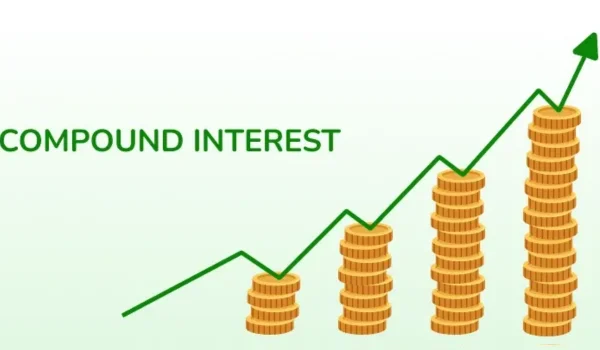
With simple interest, interest is calculated only on the original principal.
With compound interest, the interest earned is added to the principal. The next interest calculation is then made on this larger amount.
For example, suppose you invest ₹10,000 at 10% annual interest, compounded once a year.
- After Year 1: ₹11,000
- After Year 2: ₹12,100
- After Year 3: ₹13,310
The second year’s interest is ₹1,100 rather than ₹1,000 because the second year’s calculation is based on ₹11,000.
This is the basic effect of compounding. RBI’s financial education material uses the same type of example to explain how interest earned becomes part of the amount earning interest in subsequent periods.
How Does Compound Interest Work?
The process can be understood in four simple steps:
Initial Principal → Interest Earned → Interest Added to Principal → Interest Earned on New Amount
Suppose you deposit ₹50,000 at an annual compound interest rate of 8%.
During the first year, you earn ₹4,000.
Your balance becomes:
₹50,000 + ₹4,000 = ₹54,000
In the second year, the 8% interest is calculated on ₹54,000 rather than the original ₹50,000.
Therefore, the second year’s interest becomes ₹4,320.
The balance becomes:
₹54,000 + ₹4,320 = ₹58,320
The longer the money remains invested and the more frequently interest is compounded, the greater the effect can become.
Compound Interest Formula
The basic compound interest amount formula is:
A = P(1 + r/n)^(nt)
Where:
- A = Final amount
- P = Principal amount
- r = Annual interest rate in decimal form
- n = Number of times interest is compounded per year
- t = Time period in years
The compound interest itself can be calculated as:
Compound Interest = A − P
For annual compounding, where interest is compounded once each year, the formula becomes:
A = P(1 + r)^t
Example of Compound Interest Calculation
Suppose:
- Principal = ₹20,000
- Interest rate = 10% per year
- Compounding = Annually
- Period = 3 years
The calculation is:
A = ₹20,000 × (1 + 0.10)^3
The final amount is:
₹26,620
Therefore:
Compound Interest = ₹26,620 − ₹20,000 = ₹6,620
So, ₹20,000 grows to ₹26,620 over three years at 10% annual compound interest.
Compound Interest vs Simple Interest
The main difference is how interest is calculated.
| Factor | Simple Interest | Compound Interest |
| Interest calculated on | Original principal | Principal + accumulated interest |
| Interest on previous interest | No | Yes |
| Growth | More linear | Can accelerate over time |
| Long-term effect | Lower | Generally higher for the same rate |
| Common use | Certain calculations and arrangements | Deposits, investments and various financial products |
For example, ₹10,000 at 10% for 10 years produces ₹20,000 under simple interest. RBI’s financial awareness material shows that compounding can produce a substantially higher amount over the same period; the result also depends on how frequently the interest compounds.
Why Is Compound Interest Important?
- Helps Investments Grow
When returns remain invested, future returns can be earned on the accumulated amount. This is one reason long-term investing can benefit from compounding.
- Time Becomes Important
The longer money remains invested, the more opportunities there are for accumulated returns to generate additional returns.
For this reason, starting early can be valuable even when the initial investment amount is relatively small.
- Regular Investing Can Increase the Effect
When additional money is invested regularly, each contribution can potentially participate in future growth.
For example, systematic investments can combine regular contributions with the effect of compounding over time.
- It Also Matters for Debt
Compounding is not always beneficial.
If interest accumulates on unpaid debt, the amount owed can increase because future interest may be calculated on an amount that includes previously accumulated interest. RBI specifically warns that compounding can work against borrowers when debt remains unpaid.
What Is Compounding Frequency?
Compounding frequency means how often interest is added to the principal during a year.
Common frequencies include:
- Annually
- Half-yearly
- Quarterly
- Monthly
Suppose the annual rate and principal remain the same. More frequent compounding can result in a higher final amount because interest is added to the balance more often.
However, the actual return on a financial product depends on its specific terms, rate and compounding method.
Factors That Affect Compound Interest
Four major factors determine the result:
Principal
A larger initial amount can produce greater interest when the rate and period remain the same.
Interest Rate
A higher rate generally produces greater growth, assuming all other factors remain unchanged.
Time
A longer investment period gives compounding more opportunities to work.
Compounding Frequency
More frequent compounding can increase the final amount compared with less frequent compounding at the same nominal annual rate.
How to Make Compound Interest Work for You
You can potentially benefit from compounding by:
- Starting to save or invest early.
- Investing regularly.
- Reinvesting returns where appropriate.
- Avoiding unnecessary withdrawals from long-term investments.
- Comparing interest rates and compounding terms.
- Paying high-cost debt on time to prevent interest from accumulating.
RBI financial education material similarly recommends starting early, investing regularly and repaying debts fully and on time.
Where Is Compound Interest Used?
Compound interest or compounding principles can be relevant to several financial products and situations, including:
- Fixed deposits
- Savings and investment products
- Bonds and other investments
- Loan calculations
- Credit-related debt
- Long-term wealth planning
The exact method of calculating interest varies between products, so the terms and conditions of the particular financial product should always be checked.
FAQs
What is compound interest in simple words?
Compound interest means earning interest on the original money as well as the interest already accumulated.
What is the difference between simple and compound interest?
Simple interest is calculated on the original principal, while compound interest also considers accumulated interest.
Is compound interest good for investors?
Compounding can help investments grow over time when returns remain invested, although actual investment returns are not guaranteed.
Does compound interest increase loan costs?
It can. When unpaid interest is added to the outstanding amount under applicable loan terms, future interest can increase the total amount owed.
How often can interest be compounded?
Depending on the financial product, interest may be compounded annually, half-yearly, quarterly, monthly or at another specified frequency.
Why is time important in compound interest?
A longer period gives accumulated interest more opportunities to generate additional interest, which can significantly increase the effect of compounding.
Conclusion
Compound interest is one of the most important concepts in personal finance. It allows accumulated interest to become part of the amount that earns future interest. Over longer periods, this can create significant growth in savings and investments.
The key factors are principal, interest rate, time and compounding frequency. Understanding these factors can help you compare financial products, estimate future values and understand how both investments and debt can grow over time.