How to Start an E-Commerce Business in India
Starting an e-commerce business in India has become an attractive opportunity for entrepreneurs who want to sell products or services online without necessarily investing in a traditional retail store. With the growth of digital payments, smartphone usage, online shopping, and logistics networks, businesses can reach customers across multiple cities and states through websites, online marketplaces, and social media platforms.
Whether you want to sell clothing, electronics accessories, home decor, beauty products, handmade items, groceries, or digital services, an e-commerce business can be started on a relatively small scale and expanded as demand grows. However, success requires more than listing products online. You need a profitable business model, reliable suppliers, appropriate registrations, a secure payment system, effective delivery arrangements, and a clear marketing strategy.
From a business finance perspective, the most important objective is to build a business that generates sustainable profits rather than focusing only on sales volume. Product costs, marketplace commissions, shipping, advertising, returns, taxes, and working capital can significantly affect your earnings.
This article explains how to start an e-commerce business in India, choose the right business model, arrange registrations, estimate investment, manage expenses, attract customers, and grow your online business.
Understand the E-Commerce Business Model
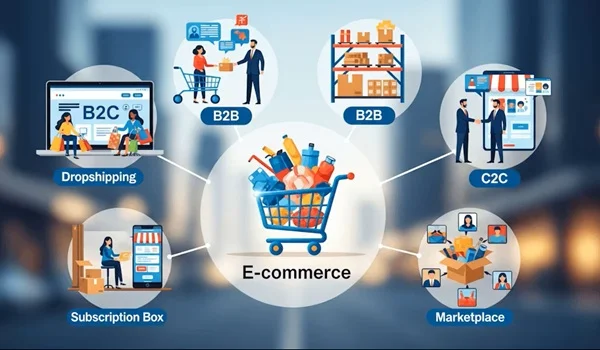
Before investing money, decide how you want to sell products online. Your business model determines the amount of capital required, your operational responsibilities, and your potential profit margins.
Marketplace selling
Sell products through established online marketplaces. These platforms can provide access to customers and logistics services, although seller fees, commissions, advertising costs, and platform policies affect profitability.
Own online store
Create your own website and sell directly to customers. You have greater control over branding, customer experience, and marketing, but you must attract visitors and manage the technology and operations.
Social commerce
Sell through social media, messaging applications, and community networks. This can be suitable for handmade products, fashion accessories, customized gifts, and other niche products.
Dropshipping or supplier-fulfilled selling
A supplier ships products directly to customers on your behalf. This can reduce inventory investment, but you still need to manage customer service, delivery expectations, product quality, and returns.
For beginners, testing a small range of products through a marketplace or a simple online store can help validate demand before making a large investment in inventory.
Choose the Right Products to Sell
Product selection is one of the most important decisions when starting an online business. A product may generate substantial sales but still produce losses if competition is intense or fulfillment costs are high.
Consider the following factors when choosing products:
- Customer demand: Identify products that solve a specific problem or meet an established need.
- Competition: Examine competing products, customer reviews, pricing, and delivery promises.
- Profit margin: Calculate the amount remaining after product costs, shipping, commissions, advertising, and expected returns.
- Storage and shipping: Lightweight, durable products can be easier and less expensive to handle.
- Repeat purchases: Consumable products and accessories may encourage repeat orders.
- Regulatory requirements: Food, cosmetics, electronics, healthcare products, and other regulated categories may require additional compliance.
Potential categories include home organization products, clothing, stationery, regional handicrafts, personalized gifts, pet accessories, and selected lifestyle products. These are examples rather than guaranteed profitable opportunities.
Before ordering large quantities, test a limited range of products and collect feedback from actual customers.
Register Your Business and Complete Legal Formalities
Once you have selected your products and business model, complete the registrations applicable to your business.
Choose a business structure
You can start as a sole proprietor, partnership firm, LLP, or private limited company. A sole proprietorship may suit an individual testing a small business, while an LLP or company may be appropriate when there are multiple owners, investors, or plans for expansion.
Consider liability, compliance costs, taxation, and future funding requirements before deciding.
Obtain the required registrations
The registrations you may need include:
- PAN: The proprietor’s PAN or the business entity’s PAN, as applicable.
- GST registration: Depending on your turnover, business model, sales locations, and applicable GST provisions.
- Udyam Registration: Optional for eligible MSMEs, with potential access to applicable schemes.
- Shops and Establishments registration: Where required by state or local law.
- FSSAI registration or license: For businesses dealing in food products, where applicable.
- Import Export Code: Generally required for importing or exporting goods, subject to exemptions.
- Trademark registration: Worth considering if you want to protect your brand name or logo.
Understand GST rules for online sellers
GST requirements deserve special attention because they can affect your launch date and product pricing.
For many sellers, registration is mandatory under the applicable GST rules. However, eligible small suppliers of goods selling through e-commerce operators may qualify for an exemption from mandatory registration if they satisfy the prescribed conditions, including restrictions on inter-state sales and enrolment requirements.
Do not assume that every marketplace seller must register regardless of circumstances, or that every small seller can operate without GST registration. The applicable rule depends on the product, platform, sales territory, and business model.
If you sell through your own website, your GST obligations also depend on the ordinary registration rules and the nature of your supplies.
Estimate the Investment Required
The amount needed to start an e-commerce business depends on the products you sell, the inventory you hold, and the technology and marketing services you use.
A small home-based business may begin with a modest budget, while a brand holding substantial inventory or operating its own warehouse may require considerably more capital.
The following figures are illustrative planning estimates, not fixed market rates.
| Expense | Estimated starting budget |
| Business setup and basic documentation | ₹2,000–₹10,000 |
| Initial product inventory | ₹10,000–₹50,000 |
| Website and store setup | ₹3,000–₹20,000 |
| Packaging materials | ₹2,000–₹8,000 |
| Initial advertising and promotion | ₹5,000–₹20,000 |
| Working capital reserve | ₹10,000–₹30,000 |
| Illustrative total | ₹32,000–₹1,38,000 |
These estimates may overlap with other expenses and exclude major equipment purchases, warehouse rent, specialist licenses, and substantial software development. Marketplace sellers may spend less on website development but still incur platform fees and advertising costs.
A practical strategy is to begin with a limited product range, keep fixed expenses low, and reinvest profits after confirming customer demand.
Find Reliable Suppliers and Manage Inventory
Your supplier affects product quality, delivery speed, customer satisfaction, and profit margins. Compare multiple suppliers before committing to large orders.
Ask potential suppliers about minimum order quantities, payment terms, product warranties, replacement policies, packaging requirements, and delivery timelines.
Before placing a bulk order:
- Request product samples.
- Inspect product quality and packaging.
- Verify supplier credentials and invoices.
- Negotiate prices based on realistic sales volumes.
- Maintain a record of stock purchases and sales.
- Monitor slow-moving inventory to avoid tying up cash.
For dropshipping, confirm that the supplier can maintain stock availability and dispatch orders within the promised timeframe. You remain responsible for the customer experience even if another party ships the product.
Set Up Your Online Store
You can sell through an established marketplace, your own website, or a combination of channels.
If you create your own website, make sure it includes the following essentials:
- A clear product catalogue with accurate descriptions.
- High-quality product photographs.
- Transparent prices, taxes, and delivery charges.
- Secure payment options.
- Contact details and customer support information.
- Shipping, cancellation, refund, and return policies.
- Privacy and terms of use information.
- Appropriate disclosures required by consumer protection rules.
Your website should work smoothly on mobile phones because many customers shop through mobile devices.
If you use a marketplace, review its seller policies, commission structure, payment settlement cycle, return rules, advertising options, and packaging requirements before listing products.
Arrange Payments and Delivery
A reliable payment and logistics system is essential for smooth e-commerce operations.
Payment collection
Depending on your selling channel, you may offer prepaid payments, eligible digital payment methods, and cash on delivery.
Payment gateways may charge transaction fees. Cash-on-delivery orders can also create additional costs when customers refuse deliveries or parcels return to the seller.
Shipping and order fulfilment
Compare courier providers based on delivery coverage, shipping rates, tracking facilities, pickup availability, and reverse-logistics charges.
Choose packaging that protects the product without adding unnecessary weight. For fragile or expensive products, consider suitable insurance and proof-of-delivery arrangements.
Maintain a clear process for damaged products, lost shipments, customer complaints, and returned orders.
Calculate Your Profit Before Setting Prices
One of the biggest mistakes in e-commerce is treating the difference between the selling price and purchase price as net profit.
Your actual contribution must account for all variable costs associated with an order.
Consider this example for a product sold for ₹1,000, assuming the amounts below are comparable costs excluding recoverable GST.
| Particulars | Amount |
| Selling price, excluding applicable GST | ₹1,000 |
| Product purchase cost | ₹450 |
| Packaging and shipping | ₹100 |
| Marketplace and payment charges | ₹120 |
| Advertising cost per order | ₹100 |
| Expected return-related cost | ₹50 |
| Contribution before fixed expenses and income tax | ₹180 |
The contribution margin in this example is 18% of the selling price. It is not the final net profit because fixed overheads, salaries, software, accounting expenses, and other costs still need to be considered.
For GST-registered businesses, the calculation should distinguish output GST, eligible input tax credit, and expenses that are not recoverable. Tax treatment varies by transaction and expense.
Use this calculation to decide whether your pricing is sustainable before launching advertising campaigns.
Market Your E-Commerce Business
Once your products are ready, focus on attracting the right customers. Marketing should be planned according to your budget and the profit available from each order.
Search engine optimization
Use relevant product names, clear descriptions, useful buying guides, and informative category pages to help potential customers discover your website through search engines.
Social media marketing
Publish product demonstrations, customer testimonials, styling ideas, tutorials, and behind-the-scenes content. Select platforms that match your target audience instead of trying to maintain every social media account.
Paid advertising
Search and social media advertisements can generate traffic quickly, but they should be tested carefully. Start with a limited budget, track conversion rates, and measure the cost of acquiring each customer.
Customer retention
Encourage repeat purchases through reliable service, helpful customer support, loyalty benefits, and relevant follow-up communication. Repeat customers can reduce dependence on expensive advertising.
Maintain Accounting and Legal Compliance
Keep your financial records organised from the beginning. Separate personal and business transactions wherever possible, reconcile marketplace settlements, and maintain purchase invoices, sales records, shipping expenses, advertising bills, and refund details.
Depending on your business, you may need to manage:
- Applicable GST returns and tax payments.
- Income tax returns and advance tax obligations, where applicable.
- Tax deducted or collected through relevant transactions.
- Consumer protection and e-commerce disclosure requirements.
- Product labelling, safety, and industry-specific rules.
- Employee and local business compliance, where applicable.
Marketplace settlements may include deductions, commissions, refunds, and tax-related amounts. Reconcile these with your accounting records rather than recording the entire bank credit as sales revenue.
Common Mistakes to Avoid
New e-commerce entrepreneurs should avoid these frequent mistakes:
- Investing heavily in stock before testing demand.
- Choosing products solely because competitors appear successful.
- Ignoring shipping, returns, and advertising when setting prices.
- Depending entirely on one supplier or sales channel.
- Making misleading product claims or using inaccurate photographs.
- Failing to explain delivery times and return conditions.
- Spending heavily on advertising without tracking profitability.
- Ignoring tax obligations and business records.
- Expanding too quickly without sufficient working capital.
Frequently Asked Questions
Can I start an e-commerce business from home?
Yes. Many entrepreneurs start from home to reduce rent and operating costs. You must still comply with applicable tax, local business, product, and consumer protection requirements.
Is GST registration compulsory for an online business?
Not in every case. The requirement depends on the type of supply, turnover, sales channel, and applicable exemptions. Eligible small suppliers of goods may qualify for specific exemptions when selling through e-commerce operators, subject to prescribed conditions.
How much money is needed to start an e-commerce business?
A small business may be launched with a budget of approximately ₹30,000–₹1,50,000, depending on inventory, technology, packaging, marketing, and working capital requirements. A larger operation may need significantly more investment.
Which is better: a marketplace or your own website?
A marketplace can offer access to existing customers, while your own website gives you greater control over branding and the customer experience. Some businesses begin with a marketplace and develop their own website as the brand grows.
How long does it take to become profitable?
There is no fixed timeline. Profitability depends on product demand, margins, advertising efficiency, repeat purchases, returns, and operating costs. Test your business model and monitor cash flow before expanding.
Conclusion
Starting an e-commerce business in India can be an effective way to enter the market without the cost of a traditional retail outlet. However, long-term success depends on selecting the right products, understanding legal requirements, building dependable supplier relationships, and managing every expense associated with an order.
Begin with a focused product range, calculate your contribution margin, arrange reliable payment and delivery systems, and invest in marketing only after establishing a clear understanding of your costs. Maintain accurate financial records and complete the registrations applicable to your business.
The most sustainable e-commerce business is not necessarily the one with the highest sales, but the one that consistently earns a healthy margin, manages cash flow effectively, and delivers a reliable customer experience.