Subscription Business Model: How It Works, Types, Benefits and Examples
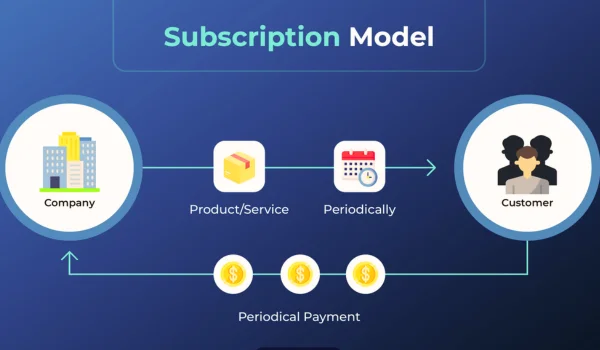
The subscription business model is a model where customers pay a recurring fee to continuously access a product or service. Instead of earning revenue from a one-time sale, the business aims to generate income from customers over a longer period.
Subscriptions are commonly used by software companies, streaming platforms, online education businesses, membership services, professional service providers and even physical-product businesses. Payments may be collected monthly, quarterly or annually depending on the business.
The model can provide more predictable recurring revenue, but it also requires businesses to continuously deliver enough value to retain customers.
Quick Information
| Particular | Details |
| Business model | Recurring revenue model |
| Customer payment | Monthly, quarterly, annual or other intervals |
| Main objective | Generate recurring revenue |
| Common examples | SaaS, streaming, memberships, subscription boxes |
| Pricing options | Flat-rate, tiered, per-user, usage-based, freemium |
| Key metric | Monthly Recurring Revenue (MRR) |
| Major challenge | Customer churn |
| Suitable for | Products or services providing continuing value |
What Is a Subscription Business Model?
A subscription business model allows customers to pay regularly in exchange for continued access to a product, service or benefit.
For example, instead of selling software for ₹10,000 as a one-time purchase, a company might charge ₹999 per month. The customer continues paying as long as they want to use the service.
The same concept can apply to:
- Video and music streaming
- Cloud software
- Online courses
- Gym memberships
- Digital publications
- Meal and grocery subscriptions
- Beauty or personal-care boxes
- Professional services
- Online communities
The important feature is recurring payment in exchange for continuing value.
How Does the Subscription Business Model Work?
The basic process is relatively simple:
Customer selects a plan → Makes the first payment → Receives product/service access → Recurring payment is processed → Customer continues or cancels
- Customer Chooses a Plan
The business normally provides one or more subscription plans. These could be monthly or annual plans with different features, usage limits or benefits.
- Customer Makes Payment
The customer provides the required payment information and pays for the first billing period.
- Product or Service Is Delivered
The customer receives continuous access to the service or regularly receives the subscribed product.
- Recurring Billing
At the beginning of the next billing cycle, the payment system processes the next charge according to the selected plan.
- Renewal or Cancellation
The customer can continue, upgrade, downgrade or cancel the subscription depending on the business’s terms.
Automated recurring billing helps businesses manage subscriptions at scale.
Types of Subscription Business Models
There is no single way to structure a subscription business. Companies can select different pricing models depending on their customers and products.
- Flat-Rate Subscription
Customers pay one fixed price for access to the service.
Example: ₹499 per month for a complete digital service.
This is simple to understand and easy to manage.
- Tiered Subscription
The business offers different packages at different prices.
For example:
| Plan | Monthly Price | Possible Features |
| Basic | ₹299 | Essential features |
| Standard | ₹599 | More features |
| Premium | ₹999 | Advanced features |
Tiered pricing allows businesses to serve customers with different requirements and budgets.
- Per-User Subscription
Customers pay according to the number of users accessing the service.
This is common in business software. A company with 10 users may pay more than a company with three users.
- Usage-Based Subscription
The customer pays according to consumption, such as storage, transactions, data usage or other measurable activity.
This can work well when customer usage varies significantly.
- Freemium Subscription
The basic service is available free, while advanced features require a paid subscription.
This approach can help businesses attract users before encouraging some of them to upgrade to paid plans.
Examples of Subscription Businesses
Subscription models can be used across many industries.
| Industry | Subscription Example |
| Software | Accounting or project-management software |
| Entertainment | Video or music streaming |
| Education | Online learning platform |
| Fitness | Online fitness membership |
| Food | Monthly food or meal boxes |
| Beauty | Monthly beauty product boxes |
| Media | Premium digital publications |
| Professional Services | Monthly consulting or support |
| E-commerce | Regular product replenishment |
| Communities | Paid membership groups |
The model is particularly useful when customers repeatedly need a product or service.
Benefits of the Subscription Business Model
Predictable Revenue
Recurring subscriptions can make revenue more predictable than relying entirely on one-time purchases. Businesses can use recurring revenue data for financial planning and forecasting.
Better Customer Relationships
A subscription creates an ongoing relationship rather than ending after one transaction.
Easier Revenue Forecasting
A business can monitor active subscribers and recurring revenue to estimate future income.
Opportunities for Upselling
Businesses can offer premium plans, additional users, extra features or higher usage limits to existing customers.
Customer Convenience
Customers do not have to make a new purchase every time they need the service.
Challenges of the Subscription Model
Customer Churn
Churn refers to customers cancelling their subscriptions. A business may acquire many customers but still struggle if customers leave quickly.
Continuous Value Is Required
Customers will continue paying only if they believe the product or service remains useful.
Payment Failures
Expired payment methods, insufficient funds and other payment issues can interrupt subscriptions and create lost revenue. Subscription businesses therefore need systems for payment retries and customer notifications.
Customer Acquisition Cost
Acquiring new subscribers through advertising, sales or marketing can be expensive. Businesses need enough customer lifetime value to justify acquisition costs.
Competition
Customers can easily compare subscription services and cancel when they find better value elsewhere.
Important Subscription Business Metrics
Subscription businesses should monitor several important numbers.
Monthly Recurring Revenue (MRR)
MRR measures predictable recurring revenue generated during a month.
A simple calculation is:
MRR = Number of Active Subscribers × Average Monthly Subscription Revenue
For example, if 1,000 customers each pay ₹500 per month:
MRR = 1,000 × ₹500 = ₹5,00,000
MRR is widely used to understand subscription business performance and recurring revenue trends.
Customer Churn Rate
This measures the percentage of subscribers who cancel during a specific period.
Customer Acquisition Cost
This measures how much a business spends to acquire a customer.
Customer Lifetime Value
This estimates the revenue a business can generate from a customer over the relationship.
These metrics help businesses understand whether customer acquisition and retention are financially sustainable.
How to Start a Subscription Business
A business considering this model can follow these steps:
- Identify a recurring customer need.
- Create a product or service that provides continuing value.
- Select a subscription pricing structure.
- Decide monthly and annual plans.
- Set up a website or application.
- Integrate recurring payment functionality.
- Clearly communicate pricing and cancellation terms.
- Launch with a small customer group.
- Track MRR, churn and customer acquisition costs.
- Improve the service based on customer feedback.
Businesses should also consider applicable taxation, consumer-protection, payment and data-related requirements before launching.
Subscription Model vs One-Time Sales Model
| Factor | Subscription Model | One-Time Sales |
| Payment | Recurring | Usually one-time |
| Revenue | Recurring | Transaction-based |
| Customer relationship | Ongoing | Often shorter |
| Revenue forecasting | Can be more predictable | More dependent on new sales |
| Retention | Very important | Less central |
| Churn | Major metric | Usually not applicable in the same way |
| Best suited for | Continuing value | Products bought occasionally |
Is the Subscription Business Model Profitable?
A subscription business can be profitable, but recurring revenue does not automatically mean high profits.
Profitability depends on factors such as:
- Subscription price
- Customer acquisition cost
- Customer retention
- Churn rate
- Product delivery cost
- Technology expenses
- Employee costs
- Payment processing costs
- Customer lifetime value
A business with thousands of subscribers can still lose money if its operating and acquisition costs are too high.
FAQs
What is a subscription business model?
It is a business model where customers make recurring payments to continuously access a product, service or membership.
What are common subscription payment periods?
Monthly and annual billing are common, although businesses can also use weekly, quarterly or other billing intervals.
What is MRR in a subscription business?
MRR stands for Monthly Recurring Revenue. It represents predictable recurring revenue generated from active subscriptions during a month.
What is churn in a subscription business?
Churn is the rate at which customers cancel their subscriptions during a particular period.
Is a subscription model suitable for small businesses?
Yes. Small businesses can use subscriptions for services such as consulting, memberships, online education, maintenance, digital products and recurring physical-product deliveries.
Conclusion
The subscription business model focuses on recurring payments and continuous customer value rather than one-time transactions. It can provide more predictable revenue and stronger customer relationships, but businesses must manage pricing, payment systems, customer experience and churn carefully.
The key to a successful subscription business is not simply getting customers to subscribe—it is giving them a strong reason to continue subscribing.